Silversea Mediterranean: 10 nights from Athens with Silver Dawn
Jul 19, 2028
Greece, Albania, Italy, Montenegro, Croatia, Slovenia


Cruise itinerary
Departure Port: Athens ➞
Landing: Venice
-
 Wednesday, July 19, 2028 - 6:00 PMAthens
-
Thursday, July 20, 2028 8:00 AM - 7:00 PMParos
-
Friday, July 21, 2028 8:00 AM - 7:00 PMSyros
-
 Saturday, July 22, 2028Navigation
 -
Sunday, July 23, 2028 8:00 AM - 7:00 PMSaranda
-
Monday, July 24, 2028 7:00 AM - 5:30 PMGallipoli
-
Tuesday, July 25, 2028 9:00 AM - 8:00 PMKotor
-
Wednesday, July 26, 2028 8:00 AM - 9:00 PMDubrovnik
-
Thursday, July 27, 2028 8:00 AM - 5:30 PMSibenik
-
Friday, July 28, 2028 8:30 AM - 7:00 PMKoper
-
Saturday, July 29, 2028 7:00 AMVenice
Athens
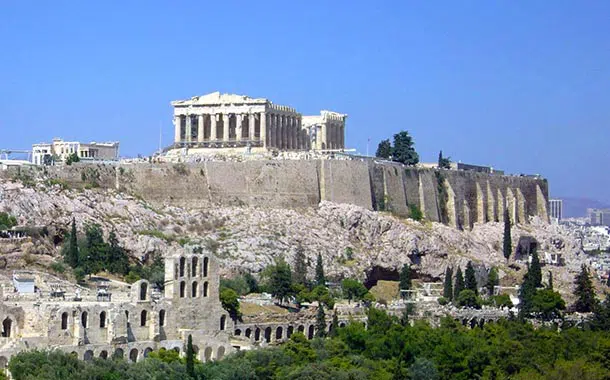
For many, Athens is a city lived two thousand five hundred years ago. Symbol is the mighty Acropolis which dominates almost every view and itinerary of every visitor, crowned by the iconic Parthenon, stands above the city, watching the sprawling modern metropolis in evolution.
Athens, the capital of Greece, is a city where antiquity and modernity, history and contemporary culture blend in a unique way. Everyone knows that the name of the city derives from the ancient Greek goddess of wisdom and justice. However, few people actually know the legend behind this event. According to myth, Athena and Poseidon, the God of the seas, vied for the right to name the city. Poseidon, to impress the inhabitants, gave them water, while Athena gave them an olive branch.
At first the choice fell on Poseidon, since the citizens considered water the most precious gift. When, once they tasted the water, they discovered that it was salty and not drinkable, they changed their minds and recognized Athena as their patron. One of the most famous historical sites in the city is the Acropolis, a majestic hill topped by ancient Doric temples, including the Parthenon, built in 477 BC. and the Erechtheion, built between 421 and 406 BC. Climbing the Acropolis, tourists can enjoy a breathtaking view of the city and the Aegean Sea. However, Athens is not only history, but also a lively cultural capital. In the Plaka district, located at the foot of the Acropolis, it is possible to stroll through the welcoming streets, visit the traditional Greek taverns and enjoy the authentic atmosphere.
Then there are the numerous cultural activities offered by the numerous museums, galleries and theaters present in the city. Athens is an important port for cruise ships that offer trips to the Mediterranean and beyond. Cruises from Athens allow guests to explore the rich cultural heritage of Greece, including the islands of Crete, Santorini and Mykonos, where you can admire the crystal clear waters of the Aegean Sea and a coast of white houses.
In addition to the Greek islands, cruises from Athens also offer the opportunity to visit other exciting Mediterranean destinations, including historic cities in Italy, Croatia and Turkey. Athens is therefore not only the historical and cultural center of Greece, but also an important starting point for cruises in the Mediterranean, which offers guests the opportunity to immerse themselves in the great history and splendid landscapes of this unique region.
Many still think of Athens as an ancient city that thrived two and a half thousand years ago. Its symbol is the mighty Acropolis, which dominates almost every view and the itinerary of every visitor, and it is crowned by the iconic Parthenon, which rises above the city, overlooking the sprawling and evolving modern metropolis.
Perhaps the most significant change is in the historical centre, which is almost unrecognisable since cars have been banned. This has liberated the area with the most significant archaeological sites, creating the longest, and undoubtedly one of the most splendid, pedestrianised zones in Europe. This huge archaeological park has brought past and present together, returning the cultural and social life of the city to the area around the ancient monuments and surrounding neighbourhoods.
Athens remains a city of contradictions; it is both frustrating and seductive. It is the oldest city in Europe, yet still in a state of transition. It is one of the safest and most vibrant European cities - an intoxicating mix of grunge and grace with an undeniably urban soul.
Paros
Syros
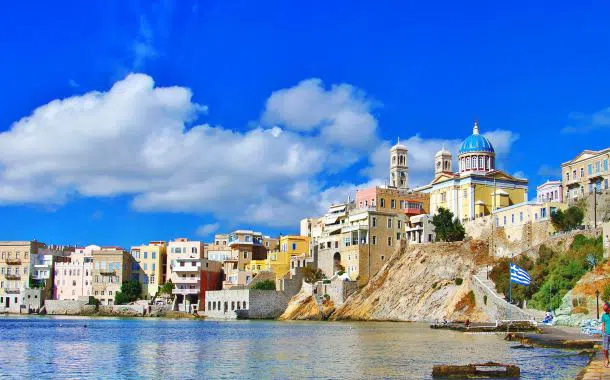
Built by the Venetians in the early 13th century on the hill of San Giorgio, Syro preserves a particularly medieval atmosphere. Countless passages between narrow streets and houses with colored doors lead to the top of the city. In addition to its urban and cultural life, Syro offers several beaches, such as those of Azolimnos and Galissas, made up of golden sand and transparent waters.
The small Siro is located in the central part of the Cyclades islands, in the waters of the Aegean Sea. It is characterized by the variety of its landscapes and Venetian architecture, the northern part is mountainous, while the interior alternates between low hills and cultivated fields. The coast is 87 km long and winds between headlands and large beaches, such as that of Ermopoli to the east and Finikas to the west. The architecture of Siro, although sharing the Cycladic characteristics, derives from the Venetian domination of the island and the rest of the Cyclades. During the Venetian occupation, the majority of the population converted to Catholicism, so Siro preserved, at the time, a significant percentage of Catholics compared to the rest of Greece, mostly Orthodox. During the Greek War of Independence in 1821, the island of Syro remained neutral under French protection, welcoming a large number of Greek refugees from all over the world to escape the horrors of the war. That mass of refugees managed to make the economy and culture of the island's capital flourish, becoming the commercial and cultural center of Greece. Today Ermopoli, queen of the Cyclades, is the capital and main port of Siro. The port rises on a natural amphitheater and is characterized by its neoclassical buildings and white houses. Among the most important buildings are: the imposing town hall (built in 1889 by Ernst Ziller) and the Apollo Municipal Theatre (in 1864), considered a miniature copy of the Teatro alla Scala in Milan. The island has 17 villages, all to be discovered. Also called the Manchester of Greece, the city has some important religious monuments such as the churches of Metamorfosis tou Sotiros, Agios Nikolaos, Ploussio and Kimisis tis Theotokou. Do not miss the Catholic community with the cathedral of San Jorge and the Vaporia district which highlights the large churches and neoclassical buildings. The Archaeological Museum and its Library has a remarkable collection of artifacts, containing numerous interesting and truly rare editions.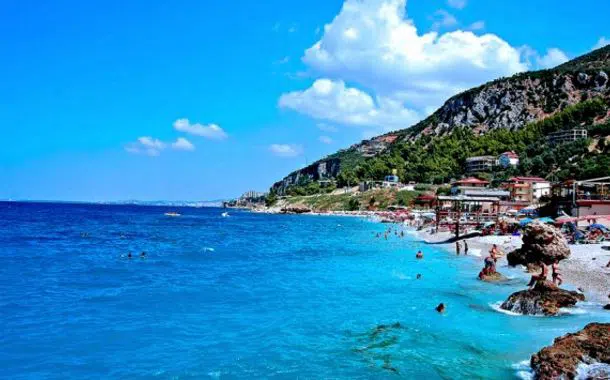
Saranda
Located in the extreme south-west of Albania along the Ionian Sea, opposite the Greek island of Corfu, Saranda is a popular Albanian city, one of the most important tourist cities on the Ionian coast.
The most welcoming and tourist city in Albania, draped along a curved bay with a thin strip of beach. The city developed in antiquity, from the 2nd and 3rd centuries AD, archaeological excavations have revealed the remains in the center of the metropolis.
Despite its lack of popularity, it has a fascinating heritage: a promenade decorated with palm and eucalyptus trees, surrounded by numerous clubs.
The beaches also offer the opportunity to practice numerous water activities.
One of the most beautiful beaches is Kakome Bay north of Seranda: The beach is huge, absolutely stunning.
Blue Eye is a lagoon, so called thanks to its turquoise shades similar to the color of the iris of an eye. At 45 meters deep, the water is incredibly transparent.
Ksamil is a small village near Saranda (15 km) and also has a beautiful beach surrounded by small islands accessible by swimming.
Castle Lekures dating back to the 16th century is located on the hills of Saranda and offers panoramic views of the Ionian Sea. The dominant position of the castle was a strategic point for protecting the city from invasions: on one side the sea and on the other a large tray suitable for cultivation and breeding. The castle has a splendid terrace and a restaurant. It is reachable by car or on foot.
The Butrint National Heritage Park World Heritage by UNESCO, is a natural park, rich in wildlife such as foxes, reptiles, martens, seals, turtles and various birds. The climate is mild and sunny for most of the year. The economy of the city of Saranda is mainly based on agricultural products from the Valtos valley, on the cultivation of mussels from the salt lake of Vouthrotos (Butrint).
In addition to the slow and constant growth of tourism, fishing is another source of wealth.
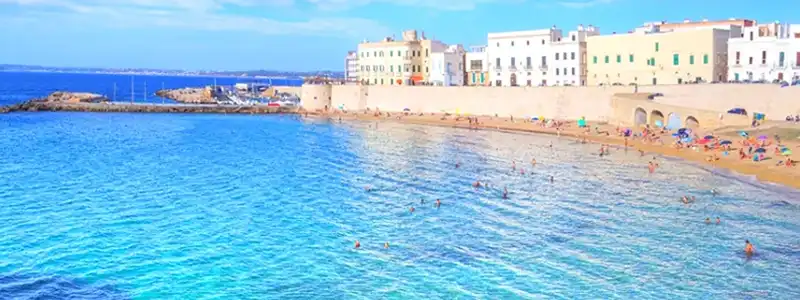
Gallipoli
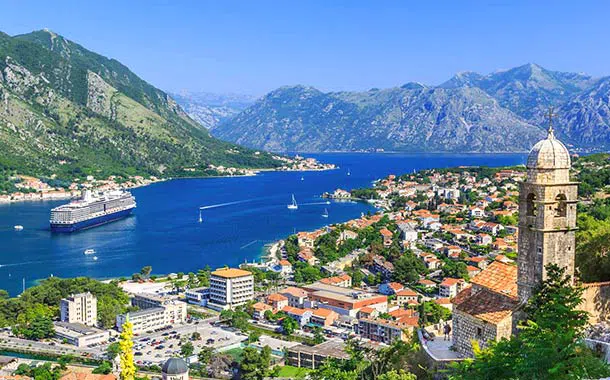
Kotor
The Adriatic Sea penetrates the jagged coast of Montenegro and winds between high mountains until it meets the exquisite and walled medieval city of Kotor.
Along the Adriatic coast of the former Yugoslavia, we find one of the most unique and fascinating European coastal areas, the city hidden in Montenegro, Kotor.
Located at the bottom of a bay, the beautiful medieval city of Kotor is considered a Mediterranean location surrounded by cliffs and an interesting historic wall. The tourist attractions of Kotor are easily reached with a pleasant walk. This small walled city, declared a UNESCO World Heritage Site, has compact dimensions that make it comfortable and easy to visit.
The central part of Kotor was built between the XII and XIV centuries. A historic center surrounded by a rather thick wall, four and a half kilometers long and fifteen meters high. This immense fortified wall reaches the bastion of Sveti Ivan (San Giovanni).
Inside the walls, it preserves an urban network cut into the stone. Its most emblematic work is the Cathedral of San Trifone, built in the 12th century. Inside the church it contains objects and frescoes sculpted during the 14th century. Furthermore, The Orthodox Church of San Nicolas, built between 1902 and 1909 in neo-Byzantine style and that of San Luca (13th century) built in Romanesque and Byzantine style.
Together with the churches, the city includes many palaces that tell its history: the Maritime Museum, located in the Grgurina Palace, a splendid baroque building located in the historic center of the country. The Drago house, with its beautiful Gothic windows, the Prima building, where Renaissance and Baroque lines are combined, the Ducal Palace and the Bizanti, both from the 17th century and the Napoleonic theater in the 19th century.
In Kotor, it is very common to see locals located along the rocky coast in the lower part of the city. In the old part of the area you will find many shops and restaurants that will delight your eyes. This location is the classic ideal city to spend quiet days or for a romantic getaway.
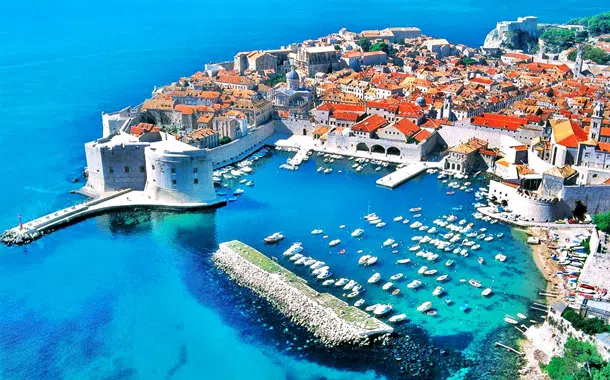
Dubrovnik
Dubrovnik is definitely special. A magnificent curtain wall surrounds marble streets and Baroque buildings exude a pearly light in the Adriatic sun.
Picturesque and artistic, Dubrovnik is a tourist hotspot and port in southern Dalmatia, at the foot of the Srđ mountain. From a historical and cultural point of view, it has been included in the list of UNESCO World Heritage Sites.
Thanks to its beauty and everything it has on offer for tourists, Dubrovnik is one of the most attractive destinations in the Mediterranean, so much so that the city can be visited all year round. In addition to its world-famous architectural heritage, this place has beautiful rocky beaches, pebble beaches and sandy beaches, enjoys a Mediterranean climate and also has lush vegetation. The main pedestrian street, Placa, is a melange of cafes and shops with monuments at each end.
Churches, monasteries and museums adorned with finely carved stone, recall an eventful history and a rich artistic tradition. Beyond the city there is a paradise of beaches, wooded peninsulas and a crystal-clear sea dotted with lush islands.
The city is also known for its delicious cuisine and its infrastructure of hotels for tourists. The city offers a wide selection of first-class restaurants, numerous sport and leisure activities, as well as cultural and entertainment events
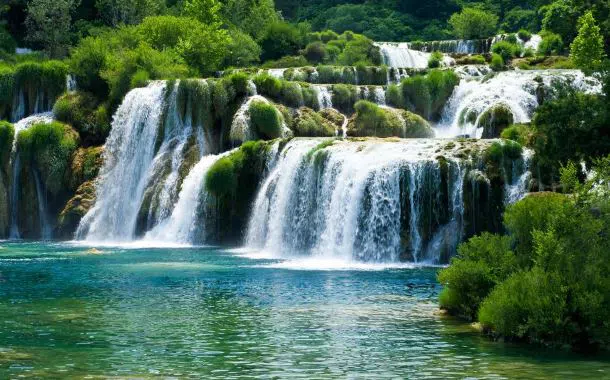
Sibenik
Sibenik is a Croatian city, which is located on the beautiful coast of Dalmatia. Famous for its Saint-Jacques cathedral, which appears on the UNESCO World Heritage List. The peculiarity of Sibenik is its traditional hat in orange and black which also represents the colors of the city. Known for its scenic beauty and the cultural richness of its historical monuments. Do not miss the statue of King Petar Kresimir IV between the park and the start of the walk along the sea. For a short period of history, Sibenik was the seat of the King of Croatia. The metropolis was under Venetian rule for almost 300 years. The old part of the city, rich in churches, palaces and ancient noble houses in typical Dalmatian stone and well-preserved walls, a real jewel. One of the most interesting sites is the garden of the medieval monastery. Sibenik has a Mediterranean climate with summer temperatures around 30 °C. The driest months, therefore the best for traveling, are July and August. A few hundred meters along the coast you will find numerous bars, restaurants and pizzerias. During the summer nights you can walk in the city and enjoy the delicious ice cream, usually homemade. In summer, there are also many popular and classical music concerts.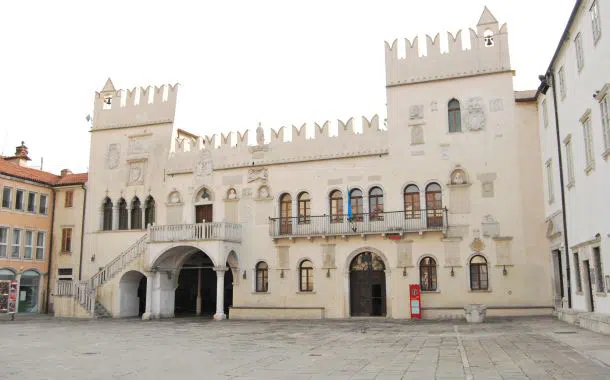
Koper
Koper (in Slovenian Koper, in Croatian Kopar, in German Gafers) is a city in Slovenia with 24,864 inhabitants, the capital of the Municipality of Koper (53,322 inhabitants) and the country's main port; it overlooks the Adriatic Sea. Among the main places of interest in Koper are the Praetorian Palace from the 15th century, in Venetian Gothic style, the Carmine Rotunda church from the 12th century, and the cathedral of San Nazario with its bell tower (55 m) from the 14th century. Koper is a bishopric with the Diocese of Koper, a suffragan of the Archdiocese of Ljubljana.
Venice
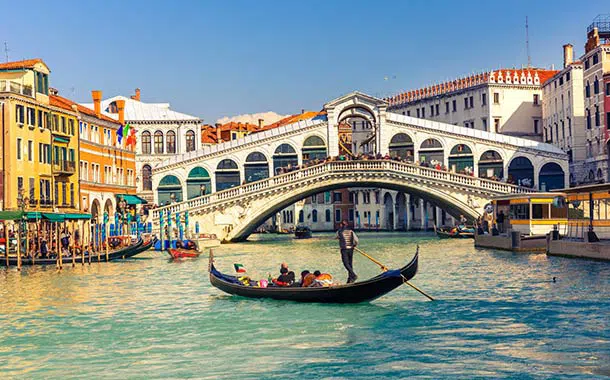
Setting sail from Venice on a cruise ship is unique and unforgettable. Discover all the cruises that depart from Venice for a great start to your holiday!
Venice it is one of the golden destinations of our age. A unique city of 120 islands, with an ancient history and endless waterways, it attracts a constant flow of tourists from all over the world to see its inspiring architecture and navigate its canals.
There are many souvenirs you can bring home from Venice, but the most lasting memory will be your impression of the city itself.
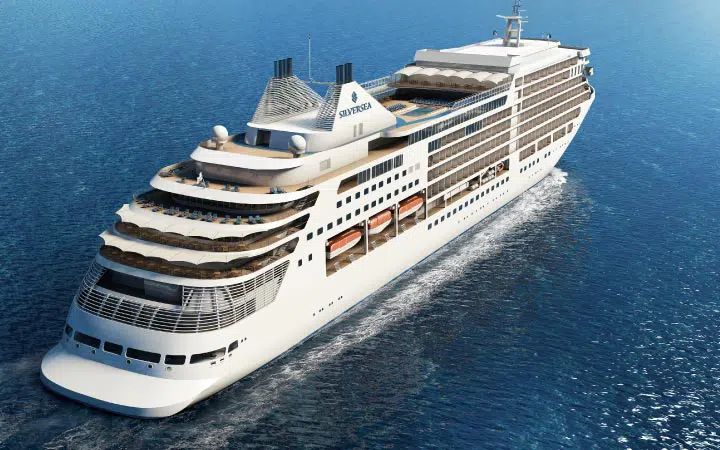
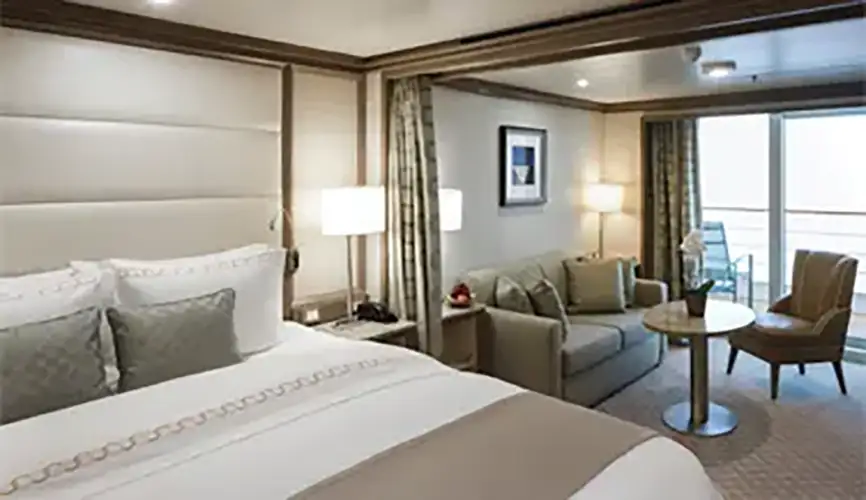
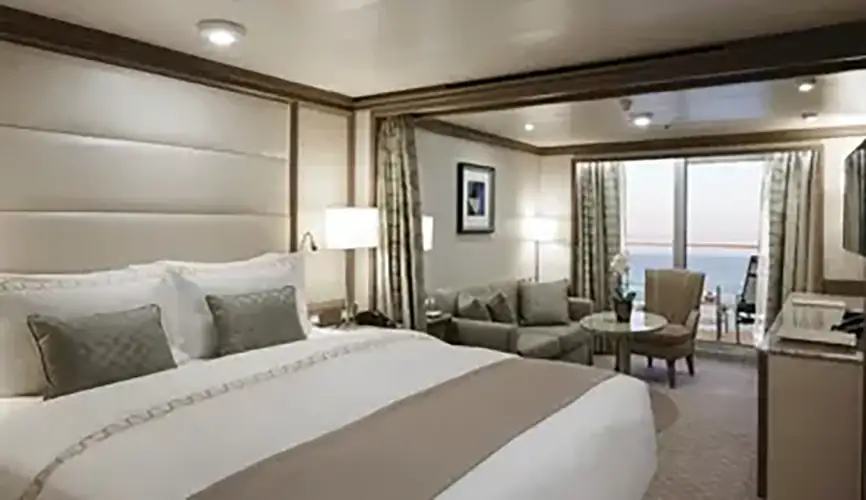
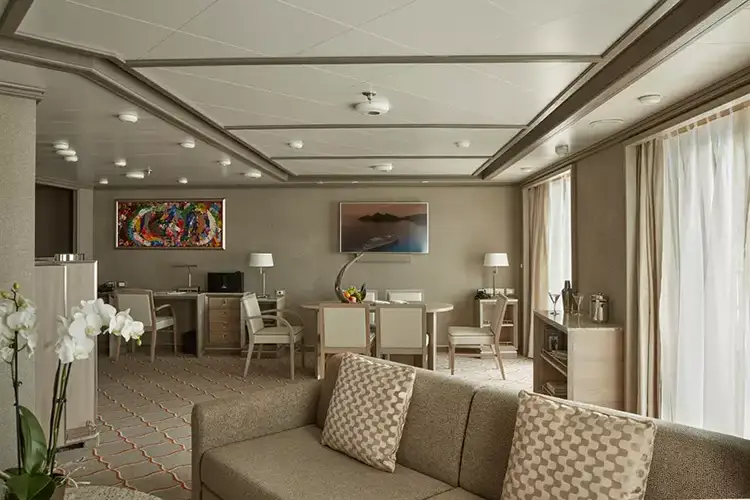
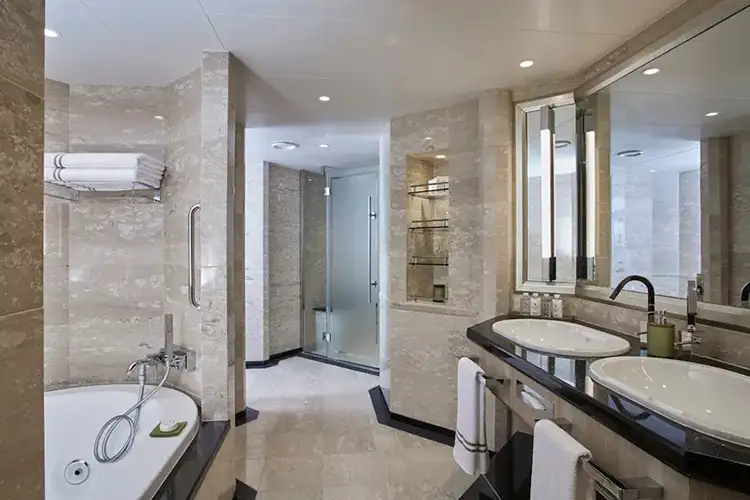
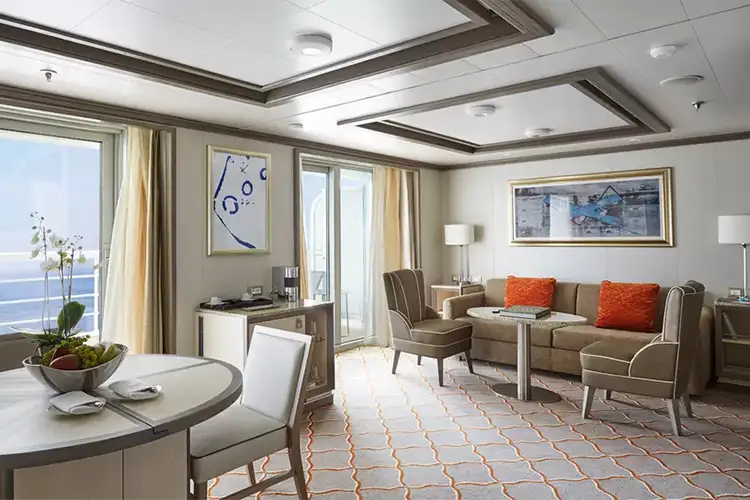
Info on the ship Silver Dawn